








Maintaining your tools is a vital part of any DIY project. Proper tool maintenance ensures that your equipment is ready and reliable when you need it. Regular care not only extends the life of your tools but also enhances their performance. Whether you are a seasoned DIY enthusiast or just starting out, knowing how to keep your tools in top shape is essential. This guide provides comprehensive tips and steps for effective tool maintenance, ensuring your projects go smoothly and safely.
- Regular cleaning prevents rust and damage to tools.
- Proper storage keeps tools organized and accessible.
- Routine inspections help identify issues before they become serious.
Table of Contents
Core Elements of the Importance of Tool Maintenance
Tool maintenance plays a significant role in the success of your DIY projects. Tools that are not well cared for can lead to poor results and even accidents. For example, a dull blade can produce uneven cuts and cause frustration. Properly maintained tools also save you money in the long run. Instead of replacing damaged tools, regular maintenance allows you to use them for years. Additionally, well-maintained tools are safer. They function correctly and are less likely to malfunction during use.
Investing time in tool maintenance is an investment in your skills. When you maintain your tools, you become more efficient in your projects. You won’t waste time searching for tools or dealing with broken equipment. Furthermore, maintaining tools can enhance your creativity. With reliable tools at your disposal, you can focus on your ideas instead of worrying about whether your equipment will work properly.
In summary, proper tool maintenance is essential for safety, effectiveness, and sustainability. By committing to routine care, you can ensure your tools are always ready for any DIY task. This practice not only leads to better results but also enhances your overall experience as a maker.
Cleaning Your Tools Regularly
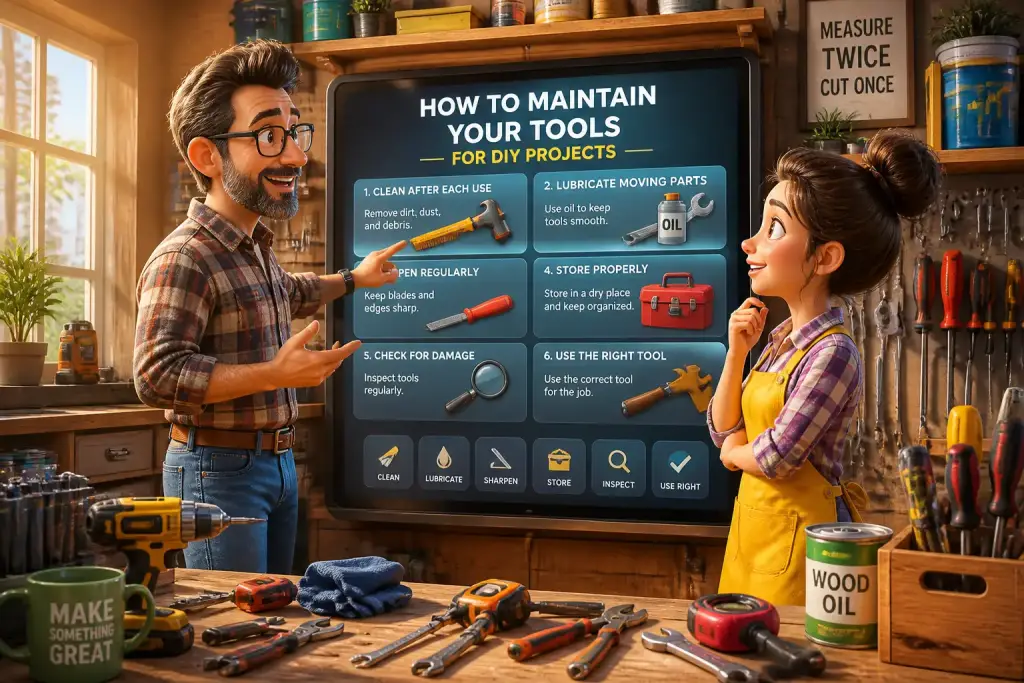
Cleaning your tools should be a regular part of your maintenance routine. Dust, debris, and moisture can accumulate on tools, leading to rust and degradation. Start by gathering the necessary cleaning supplies. You will need a soft cloth, a toothbrush or small brush, mild soap, and oil for lubrication. For power tools, refer to the manufacturer’s instructions for specific cleaning recommendations.
Step-by-Step Cleaning Process
- Remove debris: Use a brush to remove dirt and dust from all parts of the tool. Pay special attention to crevices where particles may build up.
- Wash with soap: Clean the surfaces with a mixture of mild soap and water. Use a cloth to wipe tools down and remove any sticky residue.
- Rinse and dry: Rinse the tools with clean water and dry them thoroughly with a soft cloth to prevent rust.
- Apply oil: For metal tools, apply a light coat of oil to prevent moisture from causing rust. Be sure to wipe off any excess oil.
This cleaning process is essential, especially after heavy use. For example, if you just completed a painting project, tools like brushes and rollers should be cleaned immediately to maintain their quality. Regular cleaning can help you avoid costly repairs and replacements.
Proper Storage Techniques
How you store your tools greatly impacts their longevity. Storing tools incorrectly can lead to damage and disorganization. Begin by designating a specific area for your tools. This can be a toolbox, a pegboard, or a dedicated shelf in your workshop. Keeping tools in a dry and cool environment is crucial. For instance, avoid leaving tools outside or in damp areas, as moisture can lead to rust.
Utilize storage solutions that keep tools visible and accessible. For example, hanging tools on a pegboard allows you to see everything at a glance. This setup makes it easier to find what you need without rummaging through a cluttered drawer. Magnetic strips are also great for holding smaller metal tools. They keep everything organized and within reach.
Organizing Your Tool Storage
- Group similar tools: Keep hand tools together, and store power tools in their designated spots. This organization saves time and effort when searching for items.
- Label storage containers: Use labels for drawers or bins to identify their contents easily. Clear labeling prevents confusion and helps maintain order.
- Use protective cases: For delicate tools, such as precision instruments, consider investing in protective cases. This added layer of care prevents accidental damage.
Effective storage not only protects your tools but also promotes efficiency in your projects. When everything is in its place, you can spend less time searching and more time creating.
Routine Inspections and Maintenance Checks
Conducting regular inspections of your tools is another key aspect of maintenance. A simple visual check can reveal issues that need attention. Look for signs of wear, rust, or damage. If you notice any problems, address them immediately to prevent further deterioration. For example, if you find a crack in a tool handle, it’s best to replace it before it breaks during use.
Make a habit of performing these checks periodically. Choose a specific time, such as at the beginning or end of each month, to go through your tools. During this inspection, pay particular attention to power tools, as they may require additional care. Check the cords for fraying, and ensure all safety features are functioning properly.
Checklist for Tool Inspections
- Check for rust: Inspect all metal surfaces for signs of rust and clean or treat them as needed.
- Test functionality: Ensure that all moving parts are working smoothly. For power tools, plug them in and test them to confirm they operate correctly.
- Examine safety features: Verify that all safety guards and switches are in place and functioning.
Routine inspections help you catch minor issues before they become major problems. By being proactive, you can save money and time on repairs or replacements.
Always clean and oil your tools after each use to prevent rust and ensure they function well for your next project.
Staying Informed About Tool Maintenance
Keeping up with the latest tools and maintenance techniques can enhance your DIY experience. Manufacturers often provide resources on proper care and maintenance for their products. Take advantage of these resources to stay informed about best practices. You can also follow DIY blogs and forums where tool enthusiasts share their experiences and tips. Engaging with the community can provide new insights and techniques.
Consider joining workshops or classes that focus on tool maintenance and usage. These hands-on experiences allow you to learn from experts and ask questions. You’ll gain practical skills that will help you maintain your tools effectively. For example, classes on woodworking or metalworking often include segments on tool care.
Keep a maintenance log for your tools. Document when you clean, inspect, and perform repairs. This log will help you track what needs attention and when. By being organized, you can ensure that you never overlook important maintenance tasks.
In conclusion, maintaining your tools is just as important as using them. Regular cleaning, proper storage, routine inspections, and staying informed are essential for effective tool care. By following these steps, you will enhance the performance of your tools and prolong their lifespan, allowing you to focus on your creative projects without worry.