





Table of Contents
[Hide]
Understanding the Nomadic Lifestyle
The nomadic lifestyle allows individuals to travel and work simultaneously. Many digital nomads enjoy this freedom, but it comes with its challenges. Balancing work and personal life is vital for long-term success. You can experience the world while still meeting your job responsibilities. However, without a proper structure, it can become overwhelming. Understanding the unique aspects of being a nomad is the first step in achieving a healthy work-life balance.
Key Takeaways & Quick Overview
- Establish a dedicated workspace for productivity and focus.
- Set clear working hours to separate work from personal time.
- Use productivity tools to manage tasks and minimize distractions.
As a nomad, you might find yourself in different time zones and cultures. This can affect your working hours and social interactions. You should also be aware of the distractions that come with a new environment. These factors can make it difficult to stay focused. Therefore, it is essential to develop strategies that help you maintain a steady workflow while also enjoying your surroundings.
Setting Clear Boundaries
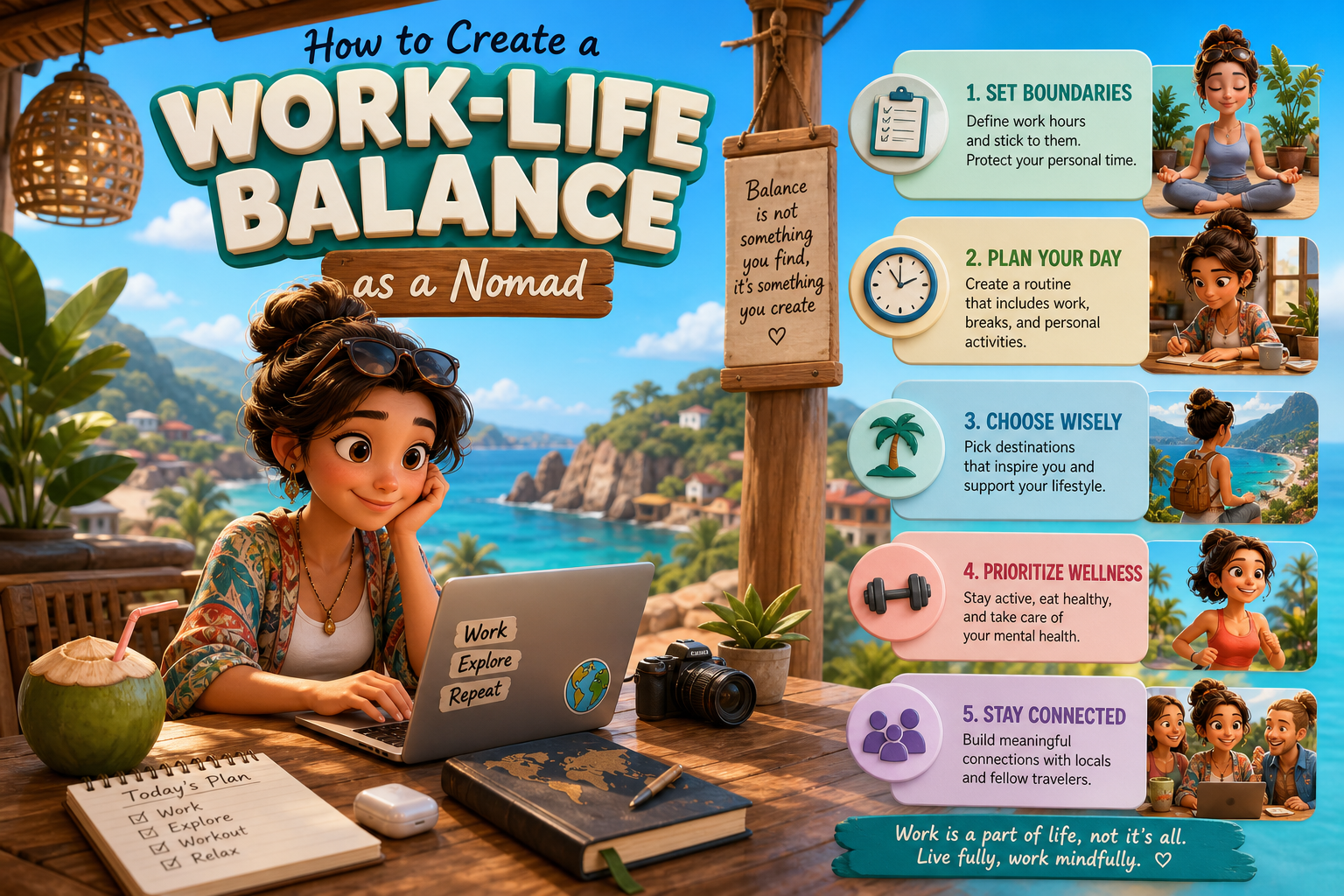
Creating clear boundaries between work and leisure is essential. Many nomads struggle with this because of their flexible schedules. To start, set specific working hours. This means deciding when you will start and finish your work each day. Stick to these hours as closely as possible. For instance, you might choose to work from 9 AM to 5 PM. This can help you establish a routine that separates work from personal time.
Another helpful tip is to create a dedicated workspace. This could be a corner in your apartment, a co-working space, or a quiet café. Having a specific place where you work can signal your brain that it is time to focus. When you leave this space, you can relax and enjoy your time off. This separation is key to mental well-being and productivity.
Establishing a Routine
Routines are powerful tools for productivity. As a nomad, you might feel tempted to mix work and travel. However, a routine helps you stay organized. Start by planning your day the night before. Write down tasks you need to complete. This simple act can clarify your goals. For example, list three main tasks to focus on each day. This way, you can prioritize what is most important.
Try to include breaks in your routine. Short breaks can boost your energy and creativity. You might take a ten-minute walk or enjoy a snack. These moments of rest can help you return to your work refreshed. Consistency in your daily routine can help you manage your time better, allowing you to enjoy both work and personal life.
Utilizing Technology
In 2026, technology plays a significant role in helping nomads achieve work-life balance. Various tools can assist in managing tasks and staying organized. For example, project management apps like Trello or Asana can help you keep track of your work. These apps allow you to organize projects, set deadlines, and collaborate with others if needed.
You can also use time management tools like Toggl or Clockify. These tools help you monitor how much time you spend on tasks. By analyzing this data, you can identify areas to improve your efficiency. Furthermore, communication tools such as Slack or Zoom can help you stay connected with your team, no matter where you are. Embracing technology can simplify your workflow and enhance your productivity while traveling.
Recommended Pro-Tip
Schedule regular breaks to recharge and maintain mental clarity while working remotely.
Prioritizing Self-Care
Self-care is important for maintaining a healthy work-life balance. As a nomad, you might prioritize work over your well-being. However, neglecting self-care can lead to burnout. Make it a priority to engage in activities that recharge you. This could be exercise, meditation, or exploring new places. Regular physical activity is essential. It helps reduce stress and boost your mood.
Additionally, ensure you get enough sleep. A well-rested mind is more productive. Try to maintain a consistent sleep schedule, even when traveling. Also, consider your diet. Eating healthy meals can significantly impact your energy levels. When you take care of your body, you will find it easier to manage your work and personal life effectively.
Finding Community
Being a digital nomad can sometimes feel isolating. Finding a community of like-minded individuals can enhance your experience. Many cities have co-working spaces or digital nomad meetups. Joining these groups can provide both professional networking and personal connections. You might share experiences, tips, and even collaborate on projects.
Online communities also offer great support. Platforms like Facebook or Reddit have groups dedicated to digital nomads. You can ask questions, share your journey, and find advice. Connecting with others can help you feel less alone and provide valuable insights. Building relationships with fellow travelers can enrich your life and help you maintain a balance between work and leisure.
Adapting to Different Environments
Adapting to new environments is a skill every nomad should develop. Each place you visit has its own culture, pace, and distractions. It is essential to be flexible and adjust your work habits accordingly. For instance, if you are in a busy city, consider working in quieter areas during peak hours. This can help minimize distractions and improve your focus.
Moreover, take time to immerse yourself in the local culture. This can be beneficial for your personal growth. Try local cuisine, participate in community events, or learn the language. These experiences can enrich your life and provide a break from work. Balancing your professional responsibilities with local experiences can enhance your overall enjoyment of the nomadic lifestyle.
Creating a Sustainable Work Schedule
A sustainable work schedule is vital for long-term success as a nomad. It is easy to overcommit yourself, especially when you want to explore new places. Start by assessing your workload. Are you taking on too many projects at once? If so, learn to say no. It is better to focus on quality rather than quantity.
Try to allocate specific days for different tasks. For instance, you might reserve Mondays for planning and Tuesdays for meetings. This structure can help you manage your time effectively while ensuring you have room for leisure activities. Remember, the goal is to enjoy your journey while still achieving your professional objectives.
Reflecting and Reassessing Your Goals
Regularly reflecting on your goals is essential for maintaining a healthy work-life balance. Take time each month to assess what is working and what is not. Are you meeting your personal and professional objectives? If not, consider adjusting your approach. This could mean changing your work hours, trying new productivity methods, or even re-evaluating your workload.
Setting both short-term and long-term goals can help you stay focused. Short-term goals provide immediate motivation, while long-term goals offer direction. Write down your goals and review them regularly. This practice can keep you accountable and motivated. By reassessing your goals, you can ensure that you are living a fulfilling and balanced life as a nomad.